← All episodes
02
Urea and Science Myths
Synopsis
Science, as a human construct, relies on myths to propagate values to students.
A few famous science myths are presented — Newton’s apple, Galileo saying “And yet it moves”, and Franklin’s kite — before delving into the myth of Wöhler’s synthesis of urea. This myth is used to define the origin story for organic chemistry, taking down vitalism. Science myths are another theme discussed in many subsequent episodes.
Compounds in this episode
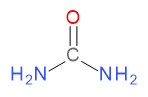
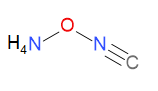
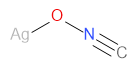

Drugs that are urea derivatives
Two modern examples of the scaffold Wöhler stumbled into.
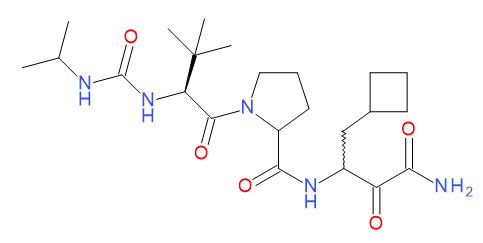
Boceprevir (Victrelis)
Active against Hepatitis C virus.
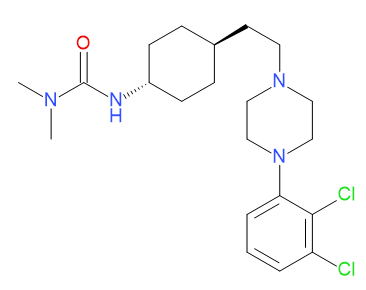
Cariprazine (Vraylar)
Treating schizophrenia and bipolar disorders.
Bibliography
- 1Cohen, P. S.; Cohen, S. M. "Wöhler's Synthesis of Urea: How Do the Textbooks Report It?," J. Chem. Ed. 1996, 73, 883. Source
- 2Jagtap, A. D.; Kondekar, N. B.; Sadani, A. A.; Chern, J.-W. "Ureas: Applications in Drug Design," Curr. Med. Chem. 2017, 24, 622-651. Source
- 3Kauffman, G. B.; Chooljian, S. H. "Friedrich Wöhler (1800-1882), on the Bicentennial of His Birth," Chem. Educator 2001, 6, 121-133.
- 4Kurzer, F.; Sanderson, P. M. "Urea in the history of organic chemistry: Isolation from natural sources," J. Chem. Ed. 1956, 33, 452. Source
- 5Livio, M. Did Galileo Truly Say, "And Yet It Moves"? A Modern Detective Story. Scientific American, 2020. Source
- 6Ramberg, P. J. "The death of vitalism and the birth of organic chemistry: Wohler's urea synthesis and the disciplinary identity of organic chemistry," Ambix 2000, 47, 170-195. Source
- 7Shorter, J. "The conversion of ammonium cyanate into urea—a saga in reaction mechanisms," Chem. Soc. Rev. 1978, 7, 1-14. Source
- 8ten Hoor, M. J. "The Formation of Urea: Controversies and Confusion," J. Chem. Ed. 1996, 73, 42. Source