Oxygen, Carbon Dioxide, and Interconnectedness: Joseph Priestley
Synopsis
Joseph Priestley is perhaps the first great experimental chemist. His careful experiments uncovered the essential gases oxygen and carbon dioxide.
These are intimately involved in the processes of life: oxygen being the feedstock for animals (including humans), and carbon dioxide being the feedstock of plants. After visiting Priestley’s lab, Benjamin Franklin recognized the interplay of systems, foreshadowing the development of ecology.
This interplay is explored by following the percentage of oxygen in the atmosphere, which is correlated with the health of the environment for living things. The episode concludes with the universal notion that an initial idea can have implications and impacts far beyond what the scientist understands at the time — a theme that appears repeatedly throughout the podcast.
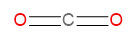
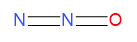
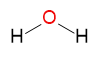
Compounds in this episode


Bibliography
- 1Aparicio, J. L.; Elizalde, M. P. "From Water to H2O: Using the Human Dimension of Science To Teach the Nature of Science," J. Chem. Ed. 2018, 95, 1763-1770. Source
- 2Berner, R. A. "Atmospheric oxygen over Phanerozoic time," Proc. Natl. Acad. Sci. USA 1999, 96, 10955-10957. Source
- 3Berner, R. A.; VandenBrooks, J. M.; Ward, P. D. "Oxygen and Evolution," Science 2007, 316, 557-558. Source
- 4Crowe, S. A.; Døssing, L. N.; Beukes, N. J.; Bau, M.; Kruger, S. J.; Frei, R.; Canfield, D. E. "Atmospheric oxygenation three billion years ago," Nature 2013, 501, 535-538. Source
- 5Hancock, J. T. "A Brief History of Oxygen: 250 Years on," Oxygen 2022, 2, 31-39. Source
- 6Johnson, S. The Invention of Air: A Story of Science, Faith, Revolution, and the Birth of America; Riverhead Books, 2008.
- 7Junge, W. "Oxygenic photosynthesis: history, status and perspective," Quart. Rev. Biophys. 2019, 52, e1. Source
- 8Kuhn, T. S. "Historical Structure of Scientific Discovery," Science 1962, 136, 760-764. Source
- 9Payne, J. L.; McClain, C. R.; Boyer, A. G.; Brown, J. H.; Finnegan, S.; Kowalewski, M.; Krause, R. A.; Lyons, S. K.; McShea, D. W.; Novack-Gottshall, P. M.; Smith, F. A.; Spaeth, P.; Stempien, J. A.; Wang, S. C. "The evolutionary consequences of oxygenic photosynthesis: a body size perspective," Photosynthesis Research 2011, 107, 37-57. Source
- 10Sessions, A. L.; Doughty, D. M.; Welander, P. V.; Summons, R. E.; Newman, D. K. "The Continuing Puzzle of the Great Oxidation Event," Curr. Biol. 2009, 19, R567-R574. Source
- 11Severinghaus, J. W. "Priestley, the furious free thinker of the enlightenment, and Scheele, the taciturn apothecary of Uppsala," Acta Anaesthes. Scand. 2002, 46, 2-9. Source
- 12Severinghaus, J. W. Fire-Air and Dephlogistication. In Hypoxia: Through the Lifecycle; Roach, R. C., Wagner, P. D., Hackett, P. H., Eds.; Springer US, 2003; pp 7-19.
- 13Severinghaus, J. W. "Eight sages over five centuries share oxygen's discovery," Adv. Physiol. Ed. 2016, 40, 370-376. Source
- 14Sperling, E. A.; Boag, T. H.; Duncan, M. I.; Endriga, C. R.; Marquez, J. A.; Mills, D. B.; Monarrez, P. M.; Sclafani, J. A.; Stockey, R. G.; Payne, J. L. "Breathless through Time: Oxygen and Animals across Earth's History," Biol. Bulletin 2022, 243, 184-206. Source
- 15West, J. B. "The strange history of atmospheric oxygen," Physiological Rep. 2022, 10, e15214. Source