← All episodes
04
Tartaric Acid, Lactic Acid, Louis Pasteur, Jacobus van ’t Hoff, and Joseph Le Bel
Synopsis
Despite Kekulé’s success with the structure of benzene, general recognition that molecules possess a fixed three-dimensional structure did not become widely adopted until the work of van ’t Hoff and Le Bel.
They independently proposed the tetrahedral carbon atom. This model was used to successfully explain the results of Pasteur’s famous experiments separating the enantiomers of tartaric acid. Hermann Kolbe’s nasty ad hominem editorial lambasting van ’t Hoff is an example of the difficulty some scientists have in dealing with change.
Tartaric acid
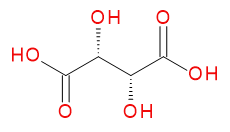
(2R,3R)-tartaric acid
L-(+)-tartaric acid — the naturally occurring form.
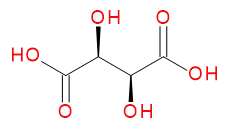
(2S,3S)-tartaric acid
D-(−)-tartaric acid — the enantiomer.
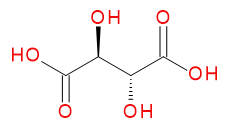
(2R,3S)-tartaric acid
The meso form.
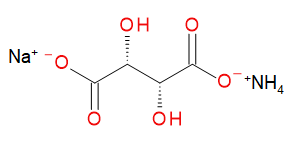
Sodium ammonium tartrate
The salt Pasteur separated by hand.
Lactic acid
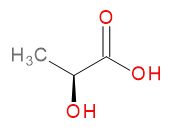
L-lactic acid
The naturally occurring form.
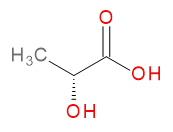
D-lactic acid
The enantiomer.
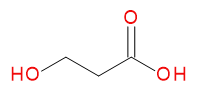
3-Hydroxypropanoic acid
Wislicenus’ lactic acid isomer.
Bibliography
- 1Cintas, P. "On the Origin of Tetrahedral Carbon: A Case for Philosophy of Chemistry?," Foundations of Chemistry 2002, 4, 149-161. Source
- 2Deichmann, U. "The Expulsion of Jewish Chemists and Biochemists from Academia in Nazi Germany," Perspectives on Science 1999, 7, 1-86. Source
- 3Derewenda, Z. "On wine, chirality and crystallography," Acta Crystallographica Section A 2008, 64, 246-258. Source
- 4Fisher, N. W. "Wislicenus and Lactic Acid: The Chemical Background to van't Hoff's Hypothesis." In van't Hoff-Le Bel Centennial, ACS Symposium Series, Vol. 12; American Chemical Society, 1975; pp 33-54.
- 5Flack, H. D. "8.1 Perspective and Concepts: Chirality in Nineteenth Century Science." In Comprehensive Chirality; Carreira, E. M., Yamamoto, H., Eds.; Elsevier, 2012; pp 1-10.
- 6Gal, J. "Louis Pasteur, Chemical Linguist: Founding the Language of Stereochemistry," Helv. Chim. Acta 2019, 102, e1900098. Source
- 7Grossman, R. B. "Van't Hoff, Le Bel, and the development of stereochemistry: A reassessment," J. Chem. Ed. 1989, 66, 30. Source
- 8Kauffman, G. B.; Myers, R. D. "The resolution of racemic acid: A classic stereochemical experiment for the undergraduate laboratory," J. Chem. Educ. 1975, 52, 777. Source
- 9Ramberg, P. J. "Johannes Wislicenus, Atomism, and the Philosophy of Chemistry," Bull. Hist. Chem. 1994, 15/16, 45-51. Source
- 10Ramberg, P. J.; Somsen, G. J. "The Young J. H. van 't Hoff: The Background to the Publication of his 1874 Pamphlet on the Tetrahedral Carbon Atom, Together with a New English Translation," Annals of Science 2001, 58, 51-74. Source
- 11Ramberg, P. J. Chemical Structure, Spatial Arrangement: The Early History of Stereochemistry, 1874-1914; Routledge, 2003.
- 12Riddell, F. G.; Robinson, M. J. T. "J. H. van't Hoff and J. A. Le Bel—their historical context," Tetrahedron 1974, 30, 2001-2007. Source
- 13Rocke, A. J. Image & Reality: Kekule, Kopp, and the Scientific Imagination; University of Chicago, 2010.
- 14van der Spek, T. M. "Selling a Theory: The Role of Molecular Models in J. H. van 't Hoff's Stereochemistry Theory," Annals of Science 2006, 63, 157-177. Source
- 15Vantomme, G.; Crassous, J. "Pasteur and chirality: A story of how serendipity favors the prepared minds," Chirality 2021, 33, 597-601. Source
- 16Weyer, J. "A Hundred Years of Stereochemistry—The Principal Development Phases in Retrospect," Angew. Chem. Int. Ed. Engl. 1974, 13, 591-598. Source